


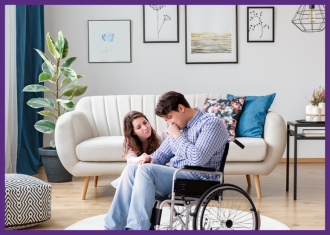


This blog aims to provide encouragement and strategies to help you or a loved one recover after trauma. We will discuss recognizing symptoms, seeking professional help, and other coping techniques to support mental health.
Note this article is directed to people experiencing depression and anxiety after a traumatic injury. However, the information and strategies can easily be used by family members to help a loved one cope with a traumatic injury.


Recognize the signs of anxiety and depression.
To manage anxiety and depression after a traumatic injury, you first must recognize the signs. Depression and anxiety manifest differently for each person. However, some common symptoms typically appear after experiencing traumatic injuries. Here are some emotional, psychological, and physical warning signs you should not ignore, which may be particularly relevant if you have a severe or lasting injury.
Understanding the signs of anxiety.


If you have a long-lasting injury like a spinal cord injury or amputation, your anxiety can be heightened due to the significant lifestyle changes and physical challenges you face. Coping with the loss of mobility or functionality can exacerbate tension, fear, and worry, making it crucial to seek specialized support tailored to your unique circumstances.
Key symptoms of anxiety include:
- Constant feelings of nervousness, agitation, or tension.
- Heart palpitations (a rapid increase in heart rate).
- Shaking or sweating.
- Trouble concentrating or making decisions.
- Problems sleeping, like insomnia or restlessness.
- Digestive issues, such as upset stomach, diarrhea, or nausea.
- An overwhelming sense of panic, peril, or dread.
- Steering clear of places or situations that provoke anxiety.
Understanding the signs of depression.

If you have a severe and/or lasting injury, the long-term impact of your condition on your daily life and independence may increase your feelings of hopelessness and despair.
Recognizing and addressing these emotional struggles is essential for beginning the healing process.
Common indicators of depression include:
- Ongoing sadness, emptiness, or feelings of hopelessness.
- Lack of enjoyment or interest in previously enjoyed activities.
- Altered eating or sleeping habits, such as too much or too little.
- General lethargy or a lack of energy.
- Difficulties making decisions.
- Thoughts of self-harm or suicide.
- Isolation from social gatherings.
- Having no motivation or interest in things.
- Feeling irritable and intolerant of others.
- Unexplained physical symptoms, like headaches, a lack of energy, or body aches.

Don’t try to manage on your own.

Human beings naturally thrive on meaningful connections and community support. Conversely, social isolation (which can occur after trauma) substantially increases your risk of chronic anxiety or depressive disorders by removing important outlets for processing emotions. Importantly, developing strong support systems with compassionate listeners who won’t judge you considerably relieves the burden of bearing emotional pain alone.
In fact, research shows a strong correlation between social/community support and increased well-being. For instance, a 2023 review of 7 studies found that stroke patients with better social support conditions have a significantly lower risk of depression.
To increase and strengthen your social connections, consider joining local or online groups with people who share similar interests or experiences. Bonding over hobbies, volunteering together on causes that resonate, or supporting one another through hardships produces extensive neurobiological and psychological benefits while expanding your social circles.
If you have a severe injury that requires a longer period to heal, or an injury that you may never recover from, you should build a strong support network that understands your challenges. Surrounding yourself with compassionate listeners who can offer nonjudgmental support can significantly alleviate emotional pain.
Seek professional help.

Seeing a mental health professional, such as psychiatrists, psychologists, social workers, or counselors, is crucial for ongoing support and guidance in the face of long-term emotional challenges. Consistent communication with a mental health professional can provide valuable insights, coping strategies, and emotional validation throughout recovery. Regular therapy sessions and check-ins can help you address and manage depression and anxiety effectively, ensuring you receive the necessary support tailored to your specific needs.
However, for therapy to work, you must be honest with your doctors. Additionally, ask your doctor if medication would ease your symptoms.
Try a support group.

Fortunately, there are specialized groups for different traumatic experiences, like groups for TBI (traumatic brain injuries), spinal cord injuries, amputees, car accident survivors, assault survivors, and more. To find a group, ask your doctor, look for groups at local hospitals, or search online. Also, you may find helpful support groups on Facebook.
Keep close connections.

Allowing friends and family to help with injury-related tasks, transportation, errands, or other needs can remove some of your stressors and associated pressures. But accepting assistance is often harder than giving it.
However, maintaining close connections with loved ones is critical for your overall well-being and recovery, particularly if you have a severe, long-lasting injury. Accepting help and support from others can ease your emotional burden and foster a sense of community that is essential for navigating the challenges imposed by your condition.
Build resilience.

If you restore your resilience by developing healthy coping skills, you can more easily move forward in recovery rather than remaining stagnant. Below are some techniques to build resilience to help you manage any anxiety and depression after a traumatic injury.
Practice self-care.
The road to overcoming depression and anxiety after a traumatic injury begins with dedicated self-care. Stress hormones released after crises if not regulated through adequate rest and restoration. Therefore, a regular sleep schedule of 7-9 hours per night preserves cognitive capacities critical for resilience. Can’t find this fact in the link above
Moreover, physical health impacts mental health; when the body is unwell, the mind similarly suffers. Balanced nutrition, proper hydration, and gentle movement can bolster your resilience.
Practice mindfulness.

Interestingly, in a small study, researchers found that spending 20 minutes outside in nature significantly reduced the level of participants’ stress hormones.
Engaging in mindfulness practices can be particularly beneficial if you have a permanent injury or one that requires longer recovery. These techniques can help reduce stress, offer a sense of calmness and clarity, and promote overall well-being amidst your ongoing physical and emotional challenges.
However, to experience results, you must consistently practice mindfulness – it’s not a quick fix. And don’t be surprised if lowering your emotional barriers feels uncomfortable in the beginning.
Reframe your perspectives.

Thus, daily journaling can slowly shift your daily perspective toward blessings rather than sources of distress. Over weeks and months, choosing to refocus your thoughts constructively rewires the brain’s neural pathways to perceive positivity despite challenges. Understanding this connection will help you move forward into positivity rather than staying stuck in the negative aspects of your injury. Ultimately, the determined focus shifts from painful pasts into brighter realities ahead.
Live one day at a time.
The traumatic impact of emotional and physical injuries often generates an overwhelming sense of uncertainty and anxiety about the future. However, purposefully remaining grounded in the present moment can help you diminish your distress.
At the same time, if you have severe or lasting injuries, you may also benefit from focusing on taking each day as it comes, managing your emotions and challenges one step at a time. By embracing the present moment and setting achievable daily goals, you can reduce your anxiety about the future and build a sense of empowerment and progress in your recovery journey.
Here are some constructive approaches for navigating each day during your recovery to avoid added stressors taking unnecessary tolls while steadily moving forward with resilience.
Create and follow a daily routine.

To create structure in your day, try to wake up, eat meals, take medications, and sleep at the same time every day. Checking off accomplished tasks on printable checklists will provide a small sense of order amidst inner turmoil. This can provide a reassuring sense of control amidst external chaos.
Additionally, planning out activities, self-care practices, and moments of relaxation can help you manage your mental health and navigate the challenges you face more effectively.
Lastly, you may find it helpful to assign specific self-care activities to certain days helpful, such as “Meditative Mondays” and “Walking Wednesdays.” Also, planning little pleasures sprinkled throughout the week can motivate you to push through challenges, especially if you include social events that can combat isolation, such as “Friend Fridays”.
Set short-term goals.

Importantly, setting realistic and measurable short-term goals can be instrumental in maintaining your motivation and tracking your progress. You can celebrate small victories and stay focused on moving forward despite obstacles by outlining specific objectives related to your physical and emotional well-being.
Firstly, choose specific, measurable outcomes achievable within 6-8 weeks.
Secondly, handwrite your goals on paper to visualize a manageable path. Each day, use your chart to document your progress toward your target goals, such as reaching psychotherapy benchmarks, completing physical therapy exercises, or reaching functional improvements. Consistently witnessing your progress will motivate you to continue!
Example of recovery goals:
- Walk independently for 8 minutes, four days per week to meet physical therapy goal.
- Practice deep breathing techniques for 20 minutes nightly to improve sleep.
- Spend 20 minutes outside three times a week to get fresh air and sunshine.
- Listen to uplifting music for 15 minutes daily to boost your mood.
- Journal thoughts and feelings two times per week to process emotions.
- Practice 5-minute breathing exercises in the morning for relaxation.
- Set a consistent sleep schedule and wind down routine to improve rest.
Use laughter to heal your heart.

Watch silly pet videos, read amusing comics or funny jokes, and spend time with people who effortlessly elicit chuckles. Regularly injecting amusement into your daily life will improve your mental and physical healing after injuries or surviving profound difficulties. A little fun truly goes a long way.
For more information, read Can Laughing Improve Your Health?
Practice self-compassion.
Unsurprisingly, being kind and understanding toward yourself during times of struggle is essential for emotional healing and resilience. In truth, if you suffer from severe or lasting injuries, you may benefit from practicing self-compassion by treating yourself with the same kindness and empathy you would offer to a loved one facing similar challenges.
Acknowledging your pain and difficulties without self-judgment can cultivate a sense of acceptance and inner strength as you navigate the complexities of your condition.
Practice forgiveness and acceptance.
Letting go of anger, resentment, and self-blame through forgiveness and acceptance can foster inner peace and emotional healing. Practicing forgiveness toward yourself and others and accepting the limitations imposed by your condition can be instrumental in releasing emotional burdens and finding inner peace.
Importantly, cultivating a mindset of forgiveness and acceptance can liberate you from negative emotions and self-criticism, paving the way for emotional healing, resilience, and growth.
Embrace each new day.

Every day brings a new opportunity for personal development, self-care, and introspection. By fostering a constructive mindset and staying attuned to your ambitions for recovery and wellness, you can foster a sense of direction and inner drive that can steer you through the twists and turns of your path. Therefore, confront each day with grace, self-kindness, and a readiness to embrace the opportunities that await you.
Take advantage of music’s healing properties.

Explore personalized playlists or albums matching your current needs and play lyrics you find uplifting. And allow sound wave frequencies to soothe and steady your aching heart during painful moments.
Finally, consider revisiting instruments played in the past, as musical engagement assists trauma recovery by activating creativity.
For more information, read Can Music Help Patients Heal?
Your journey of resilience and recovery.


Acknowledging signs of emotional distress and seeking professional guidance offer a beacon of hope and direction. As you open yourself to support, employ mindfulness, and gently reframe your perspective towards optimism, the weight of trauma begins to lift, unveiling the potential for a renewed sense of self and a brighter outlook on life.
Embracing this process with courage, compassion, and commitment lights the way forward, transforming obstacles into steppingstones toward resilience and emotional stability. In this journey, each day holds the promise of progress and each effort marks a step closer to healing. Importantly, the cumulative power of small victories will weave a resilient tapestry of recovery and renewal.

I wrote this article in collaboration with Lauren Barry, a Licensed Marriage and Family Therapist. Her work focuses on helping couples and individuals heal from substance abuse, mental health issues, and relationship challenges. With years of experience in various therapy roles, Lauren uses a solution-focused approach to support and guide her clients toward recovery and personal growth.