


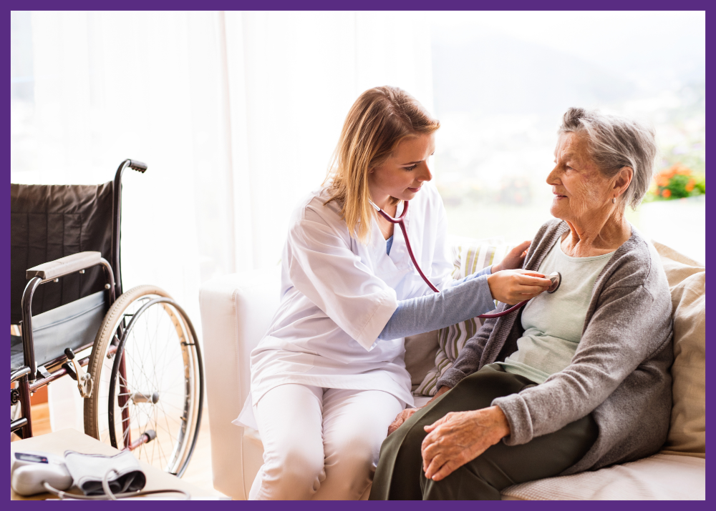
There are four kinds of medical care you can receive at home:
- Medical care services for which a healthcare professional comes to your home to help you manage a chronic illness or injury.
- Telemedicine appointments during which you see your healthcare providers via video calls.
- Remote monitoring for chronic and acute conditions.
- Hospital at home programs, run by hospitals, provide acute care for conditions that would traditionally require a stay in a hospital.
Note: For ease of reading, I use the term “doctor” throughout this article, although it generally refers to healthcare providers including nurses and nurse practitioners.
The benefits of receiving medical care at home.
There are many benefits to receiving your medical care at home, including the following:
Medical care at home can improve patient satisfaction.

Interestingly, a study evaluated satisfaction among patients treated through hospital at home programs, as compare to those treated in acute care hospitals. The hospital at home patients were more likely to be satisfied with their doctor, the comfort and convenience of care, the admission processes, and the overall care experience. Additionally, family members of patients treated through hospital at home programs were also more likely to be satisfied with multiple facets of care.
Additionally, a survey conducted by Providence St. Peter Hospital in Olympia found high levels of satisfaction among their hospital at home patients. In fact, in 2022, 100% of home patients report being satisfied, in contrast to 64% of in-hospital patients.

Medical care at home can dramatically improve access to healthcare.
Interestingly, Cadence, a remote physiologic monitory company, evaluated the impact of home monitoring for patients with Type 2 diabetes and hypertension, about 2/3 of whom lived in rural or underserved areas. Although people living in underserved areas often face barriers to quality health care and, as a result, worse health outcomes, Cadence’s remote monitoring program helped participants meet their guideline-directed blood pressure and blood glucose goals at the same and, in some cases, even higher rates than patients living in urban or non-rural areas.
Additionally, remote care can alleviate the difficulties many patients face trying to access care in person due work and/or family responsibilities.
Clearly, receiving medical care services at home can make it easier to access care and thereby manage a chronic or acute health condition.
Medical care at home can detect social determinants of health.

Importantly, home-based visits can help connect the dots between social determinants of health and health outcomes. Unsurprisingly, home visits allow providers to assess social determinants of health to a degree that is impossible when you visit a clinic.
Before receiving medical care at home, a team will determine if your home meets the required characteristics such as climate control, running water, food availability, and social support. This assessment can lead to solutions to health-related issues that otherwise could go unnoticed.
Read below to learn about the types of medical care you can receive at home.
1. Healthcare services at home.
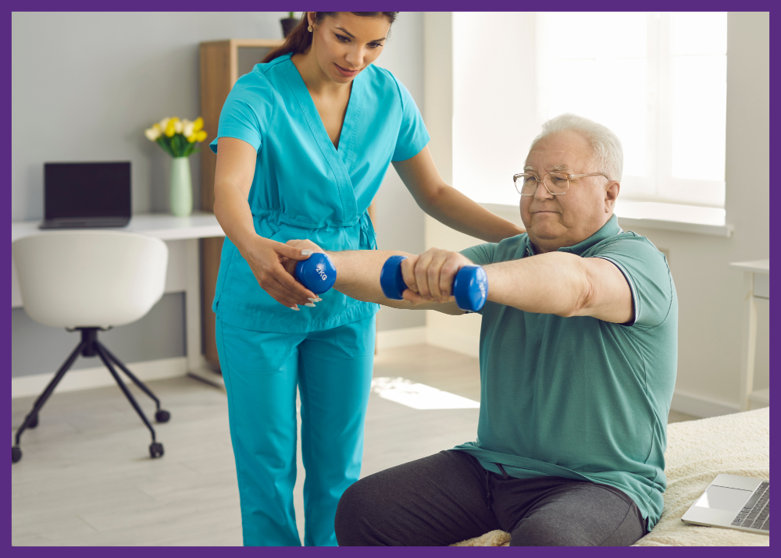
As part of these services, a variety of healthcare professionals would travel to your home to help you as part of your care plan. You may receive visits from a nurse, doctor, physical therapist, occupational therapist, speech therapist, healthcare aide, and/or others.
The services you could receive include:
- Skilled nursing care, including:
- Wound care for pressure sores or a surgical wound.
- Patient and caregiver education.
- Intravenous or nutrition therapy. (For more information, read Home Infusion Therapy Risks and Rewards.
- Injections, including osteoporosis drugs.
- Monitoring serious illness and unstable health status.
- Physical therapy.
- Occupational therapy.
- Speech-language pathology services.
- Medical social services.
You may also receive help with:
- Medication management.
- Care coordination.
Additionally, you may receive equipment, including the following:
- Durable medical equipment.
- Medical supplies you need at home.
- Disposable negative pressure wound therapy devices.
Additionally, a home healthcare aide may assist you with activities of daily living such as:
- Walking.
- Bathing or grooming.
- Dressing and undressing.
- Changing bed linens.
- Feeding.
Lastly, providers may perform a home healthcare assessment of your living conditions, assessing issues such as nutrition and home safety.
2. Telemedicine appointments.
Since Covid-19, most of us have had at least a few doctors’ appointments via a phone or video call. Although there are some negative facets of virtual doctor appointments, for many situations the pros far outweigh the cons. And you can’t beat the convenience!
For more information, read The Pros and Cons of Telemedicine.
3. Remote patient monitoring (RPM).

Remote monitoring programs use different types of devices, depending on your needs. For instance, you may use weight scales, pulse oximeters, blood glucose meters, blood pressure monitors, and/or heart monitors – each of which send data to your medical team.
Additionally, you may get an invasive device, such as a pacemaker or implantable cardioverter-defibrillator, that will pair to a platform, such as a smartphone app, to gather your health data.
Importantly, advances in technology make remote monitoring more reliable and more comfortable for patients.
Advantages of remote patient monitoring.
Certainly, there are many advantages to RPM:
- Your doctors can closely track key health indicators to monitor your health.
- With access to your own health data, you become more educated on your disease, which can help you better engage in managing your health.
- Doctors receive alerts indicating early signs of potential deterioration. Doctors can check in with you through a mobile app, text or video call. When needed, doctors can adjust your treatment plan based on your reported feedback and the hard data from the monitors.
- You may feel more confident and comfortable knowing that your doctor receives continuous real time data and alerts.
- Remote monitoring increases patient participation in shared decision making.
- If you cannot travel to a medical appointment, remote monitoring – in combination with telemedicine appointments – can help you manage your health without leaving home.
- RPM can decrease unnecessary clinic visits if you are recovering well.
- If you do need to visit a doctor, he/she will have access to your health data, helping doctors make informed treatment recommendations.
- Remote monitoring can provide more realistic views of certain vitals over a period of time, such as blood pressure, which can rise during a medical appointment due to “white coat syndrome.”
- Long-term data helps your doctor create a personalized treatment plan based on your health information collected, by:
- Determining which treatments alleviate symptoms.
- Seeing if you have complied with prescribed treatments (which can help them understand the impact of your treatments).
- Analyzing your ongoing changes in health.
- Doctors also report the following benefits:
-
- Continuous monitoring of patients enables prompt care.
- Improvement of patient self-care.
- Efficient communication.
- Increased patient confidence.
- Visualization of health trends.
- Improved patient education.
Types of conditions that can benefit from RPM.
Although used most often to manage chronic conditions, RPM may also be part of the care you receive through a hospital at home program (see our post for more information on hospital at home programs).
Although there are many medical conditions that can benefit from RPM services, here are five examples:
Diabetes.

For instance, a study published in 2019 showed that type 2 diabetes patients with more frequent and regular participation in remote monitoring had lower hemoglobin A1c levels (a measure of average blood sugar) after participating in a remote monitoring program.
Similarly, a study conducted in 2020 found that a remote patient monitoring program managed by a pharmacist helped reduce A1c levels among type 2 diabetics.
Furthermore, a study of children with type 1 diabetes found that children who used continuous glucose monitors had better glucose control and improved outcomes.
Hypertension.
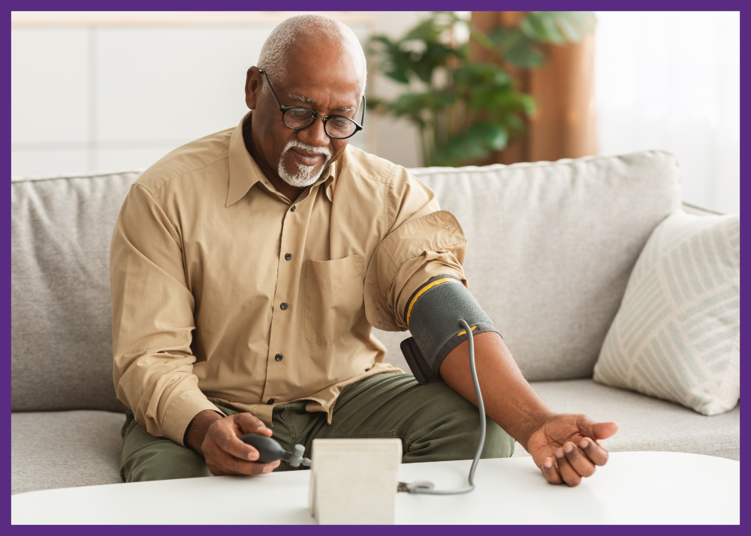
Similarly, another study showed home blood pressure monitoring combined with virtual nursing support helped maintain and even reduce blood pressure.
Importantly, another study found that home-based blood pressure measurement is highly reliable.
Interestingly, a new cardiac monitoring device with advanced technology provides high-quality, high-resolution signals, similar to “a gold standard diagnosis at the point of care.” Importantly, the monitor can show doctors a patient’s heart rhythm while the patient is experiencing symptoms, making it easier to diagnose and treat a problem.
Furthermore, patients in rural areas can use a remote cardiac monitor to receive a diagnosis and treatment plan.
Heart failure.

Fortunately, remote patient monitoring has resulted in improved care for heart failure patients. For instance, a study of patients found that medication adherence increased from 7% to 23% among those participating in RPM.
Importantly, there was a significant decrease in blood pressure and weight, although heart rates did not improve.
Cancer.

Interestingly, in a study published in 2016, randomly assigned patients receiving outpatient chemotherapy were asked to report 12 common symptoms via tablet devices. Importantly, health-related quality of life improved for patients who reported their symptoms via the tablet as compared to patients who received usual care (who didn’t remotely report their symptoms). Furthermore, patients receiving the intervention were less frequently admitted to the emergency room or hospitalized.
Potential drawbacks of remote monitoring.
Although the benefits are great, RPM does have a few potential negative aspects:
- Some doctors have concerns about the accuracy of the data, including the possibilities of false positives and patient-made measuring errors.
- Doctors worry that patients may rely too heavily on RPM, assuming their doctors are continuously monitoring their data and therefore postponing contacting their doctor themselves.
- Error messages and abnormal data can increase patient anxiety.
- The technology may prove difficult for some patients, particularly elderly patients.
- Not every home as the connectivity required to send data to healthcare providers.
- Doctors also express the following concerns:
- Increased workload
- Financial issues.
- Privacy concerns.
4. Hospital at home
In hospital at home programs, you receive hospital-level care at home. For information, read How Can You Get Hospital Care at Home?
Learn more…
Importantly, engaging in your care can help you get the best care possible. Read these posts for tips:
- Understanding Medical Information Is Harder Than Most Realize.
- 10 Tips for a Better Medical Appointment.
- How Can You Get the Best Healthcare? Actively Participate!
- Can You Trust Medical Information Online?
- Can You Trust Advice from Other Patients?
- 10 Tips to Communicate Better with Doctors.

NOTE: I updated this post on 11-26-24.