

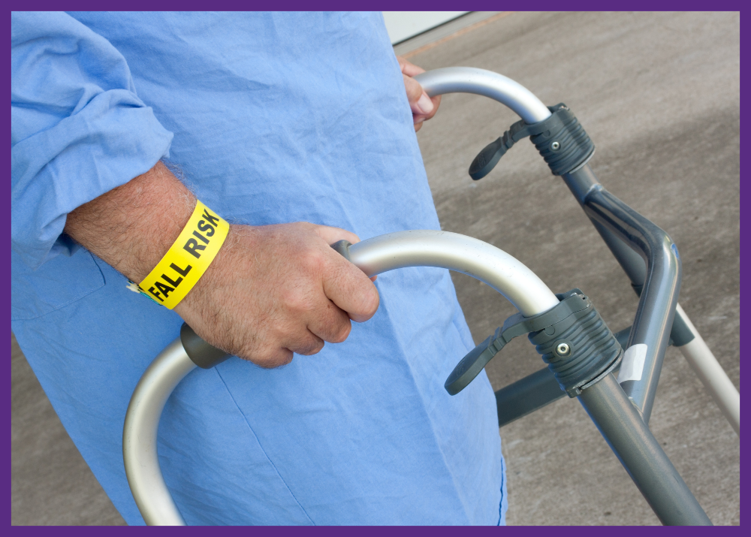
 Watching someone fall in a comedy can be funny. Falling yourself is rarely funny and is often scary. Unfortunately, patient falls in hospitals are common and dangerous. In fact, experts estimate that each year, 700,000 – 1,000,000 people in the US fall in the hospital. Research shows that 30% – 50% of falls in hospitals and other healthcare facilities result in injuries. Moreover, 4-6% of falls in hospitals result in serious injuries, including deep bruising, excessive bleeding and even death. Sadly, one fall can lead to a fear of falling that can begin a downward spiral of reduced mobility, leading to loss of function and further falls. Why do patients fall in hospitals? What can you do to reduce your risk?
Why do patients fall in hospitals?
 Patients of all ages are at risk of falling, due to physiological changes due to medical conditions, extended bed rest, medications, surgeries, procedures, and testing. Additionally, the unfamiliar environment and the use of tubes and catheters can increase the risk of falling.
Studies show that most falls in hospitals occur when patients are in their rooms, moving while unassisted. Nearly half of all falls occur in the evening and overnight, and about half involve a patient using the bathroom or a bedside commode.
Infections can also lead to falls.
Interestingly, infections can lower your blood pressure, leaving you lightheaded, dizzy, weak and/or fatigued. And in elderly patients with dementia, an infection can also increase confusion. Certainly, hospital patients with infections have an increased risk of falling.
Although it’s uncertain how frequently infections lead to falls, experts estimate that overall, 20-45% of falls are due to infections. Interestingly, a study of emergency room patients found high rates of infection among the patients who had fallen.
The most common infections were urinary tract infections (UTIs), bloodstream infections, and respiratory infections. Surprisingly, 20% of the ER patients who had fallen and had infections were under 65, suggesting that even younger people can fall due to infections.
Hospital fall prevention programs.
Obviously, the goal of hospital fall prevention programs is to reduce the number of patient falls. However, keeping patients in bed to reduce the risk of falls can lead to serious health issues from lack of mobility. To learn more about these programs, including the pros and cons, read my blog post: Hospital Fall Prevention Programs – Helpful or Harmful?
What can you do to reduce the risk of falls?
 Consider the following tips to reduce the risk of falls in a hospital (or other healthcare facility):
- Ask your hospital what steps they take to prevent falls so you can learn, and follow, their guidelines. Additionally, ask what steps they take to make sure their fall prevention programs don’t lead to dangerous issues associated with immobility.
- Since most falls occur around toileting, ask that you (or your loved one) be put on a schedule for bathroom trips, when a staff member can help the patient. If a toilet trip is needed at an unscheduled time, buzz the nurse’s station to receive help. It can take a while to get a response, don’t wait until you are desperate! Additionally, make sure you have a urinal or bedpan within reach if you cannot wait for a nurse to respond in an emergency.
- If you are a patient and staff tell you not to get out of bed alone, resist the temptation to do so – even if you feel like you could walk around safely by yourself. Similarly, if your loved one is the patient, remind him/her not to walk alone.
- Be sure there is adequate lighting in the room, as most falls happen during the evening and night.
- Make sure the floors stay dry. Notify staff if there are puddles on the floor of unknown origin. However, if someone spills water or another “safe” liquid on the floor, clean it up quickly.
- Know the signs of infection and don’t ignore them. Ask the doctor specifically what to watch for.
If a fall occurs, try to figure out why.
 After a fall, talk to your medical team about your, or your loved one’s, health in the period immediately before the fall. Work with the medical team to determine what led to the fall and how further falls can be prevented.
- Insist the medical team evaluate you or your loved one for signs of infection that may have caused a fall.
- Evaluate medications to determine if a medication, or combination of medications, could lead to dizziness or weakness, increasing the risk of falls.
Preventing falls at home.
Although this blog posts focuses on why patients fall in hospitals, falls at home pose serious risks as well. Fortunately, you can take precautions to reduce the risk of falls at home. For tips, read Home Modifications For Aging In Place at SeniorSafetyAdvice.com.
Learn more…
For more information on hospital safety, read these posts:
- Risks for Seniors in the Hospital.
- How to Choose a Hospital.
- What’s Your Hospital’s Safety Record? Is Your Hospital Safe?\
NOTE: I updated this post on 4-29-24.

Leave a Reply