

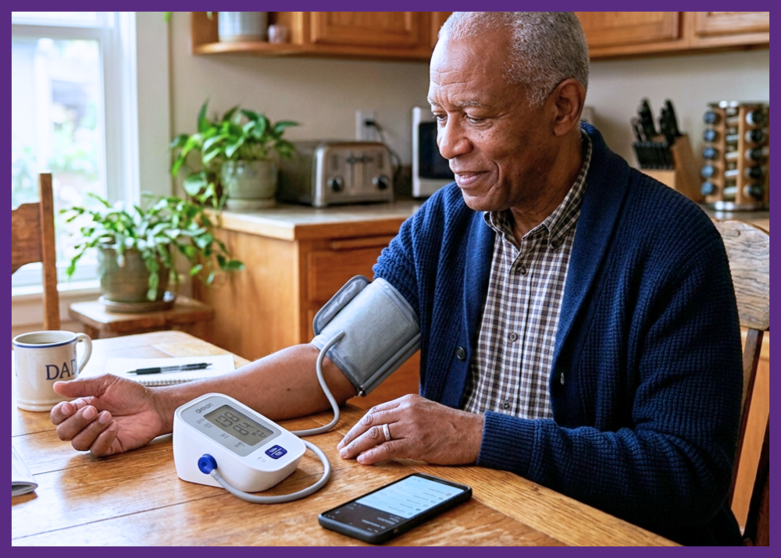
 Often referred to as remote patient monitoring (RPM), at-home health monitoring devices help patients keep track of their health when dealing with a serious health condition, such as hypertension, heart failure, diabetes, and COPD. Similarly, patients may need a monitoring device upon returning from a hospital stay or while recovering from surgery. For instance, your doctor (or your loved one’s) may prescribe monitoring devices such as blood pressure cuffs, pulse oximeters, glucose monitors, and/or cardiac monitors. Although these devices can feel overwhelming, telenursing support for monitoring devices can make the task more manageable and less stressful.
You may assume that once the equipment is set up and you learn how to operate it, the hard part is over. In reality, the harder part is knowing what the readings actually mean for you or your loved one. For instance, is the number on the screen fine or does someone need to know right now? Do you feel comfortable deciding how to handle readings that are outside a normal range? Unfortunately, most patients and family caregivers never receive training that can help in these moments. Instead, it simply becomes part of your life.
Telenursing support to the rescue!
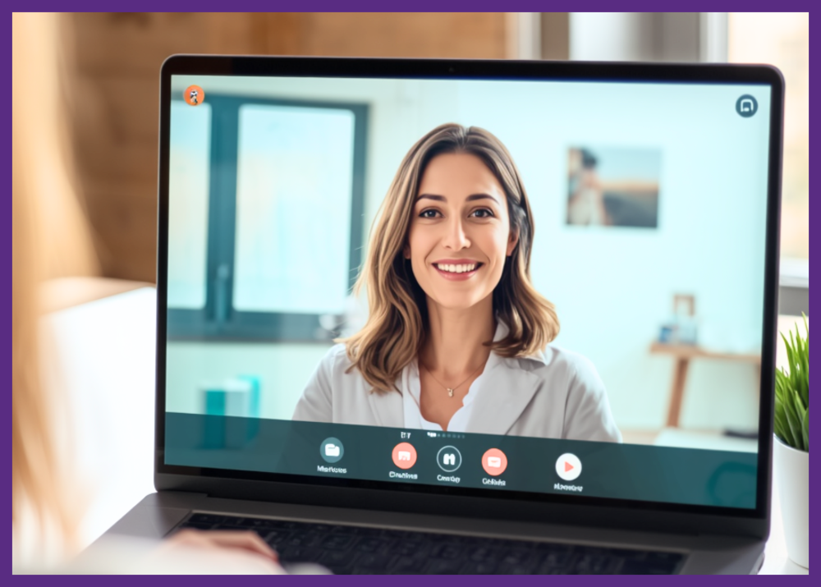 If you or your loved one needs a monitoring device at home, you will most likely receive telephone and digital support from a nurse. As the name suggests, telenursing provides a fully remote relationship, including phone check-ins, app-based data sharing, and virtual coaching, rather than home visits.
Importantly, most remote patient monitoring platforms provide nurses with real-time or near-real-time access to incoming readings, with alerts sent for values outside a predetermined range. Proactive outreach regarding concerning readings is a hallmark of a well-run program, though the exact threshold and response time depend on the telenursing provider’s protocol.
Proper telenursing support will provide you with reliable advice when you feel uncertain, helping you make appropriate medical decisions. Additionally, telenursing provides ongoing, need-based support. Not only will someone help you get “up and running”, but a nurse will support you with continued check-ins.
This article covers the kind of telenursing support you deserve and have every right to expect and ask for.
Telenursing support for monitoring devices: Your nurse should coach you, not just collect data.
 There’s a difference between a nurse who watches the data from a distance and a nurse who actually teaches you how to understand the information. You need – and deserve – the second kind.
Importantly, a good telenurse explains things in plain language, not medical jargon. Additionally, they pay attention to how you sound on a call, not just the data you share, which can help them understand your level of concern and confidence. And they know when to walk you through something one more time, and they know when you can handle more on your own.
If your nurse never asks if you feel confident in your abilities to manage the device monitoring, it’s worth bringing it up yourself. For instance, you could simply say “I want to make sure I am doing this right, can we walk through how I am handling this?”
Telenursing support for monitoring devices: What the first few days should look like.
Importantly, the way a nurse introduces you to a monitoring device matters more than you might think. If you only receive a rushed explanation once and must figure out the details, it’s easy to feel confused and overwhelmed. A better start looks different.
Instead of a rushed introduction, a nurse should walk you through your first few readings of the device in real time, over the phone or via video, watching and correcting you as you go.
Additionally, a nurse should explain what a normal reading looks like for your specific situation, not a generic number from a textbook. For example, your (or your loved one’s) normal level might not match anyone else’s “normal”.
Finally, a nurse should clearly instruct you regarding how to ask follow-up questions in the first couple of days, because, unsurprisingly, that’s usually when the real confusion appears.</p>
None of this requires fancy technology. Instead, it requires someone willing to slow down and make sure you understand how to use the device and interpret and act on the readings.
Telenursing support for monitoring devices: A number without context isn’t helpful.
 Importantly, understanding what a reading outside of your (or your loved one’s) normal range indicates is critical. For example, a blood pressure number that would be alarming for one patient may be close to normal for another. Without a proper understanding, it’s easy to either panic over something harmless or, over time, stop reacting to anything at all.</p>
Learning at the onset what number would require medical attention, and what you should do if a number reaches the critical range, can save you from unneeded anxiety while also making sure you seek medical attention when appropriate. There’s a real difference between “keep an eye on it and mention it at the next check-in” and “call for help now”. You deserve to know which is which before you face an important decision in the moment.
If your nurse only shows you numbers without explaining what they mean for you or your loved one, ask. Importantly, this is a fair question at every stage of the process.
Telenursing support for monitoring devices: You shouldn’t have to wonder if silence means good news.
 A common complaint among patients and caregivers is that they only hear from the care team when something is wrong. Unsurprisingly, this trains you to dread every phone call and to never quite trust that no news means things are okay.
It shouldn’t be that way. A good telenursing relationship includes regular check-ins on a predictable schedule, whether or not anything is wrong, so you know what a lack of contact means. When you report something that concerns you, you should hear back, even if the answer is reassuring, so you’re never left wondering if your message even landed.
And the nurse should ask you directly about how you’re holding up, not just what the numbers say, because your exhaustion is relevant information too.</p>
Of course, this kind of two-way communication takes more time from the nursing side. But it’s what turns you from someone anxiously watching a screen into someone who trusts the process.
Telenursing support for monitoring devices: Help for missed readings.
If you miss a reading because an app logged you out, or a device needed adjusting, that’s not a failure on your part. Often, it’s a design problem or a training gap, not a patient or caregiver mistake.
A good telenursing program addresses missed readings and/or device issues as part of the clinical relationship, instead of requiring you to sort through yourself via a tech support line. Ideally, the same nurse who trained you on the device can quickly tell whether a missed reading is a technology hiccup or something that needs clinical attention. If every glitch sends you into a maze of general tech support, the system is leaning on you more than it should.
Telenursing support for monitoring devices: Questions you should feel free to ask, anytime.
 It’s easy to hold back questions because you don’t want to seem unqualified or waste a nurse’s time. However, you shouldn’t feel that way. Instead, you should ask the questions below as often as you need:
- What does a normal range look like for me or my loved one specifically, not just in general?
- What should make me call right away instead of waiting for the next scheduled check-in?
- Who reviews our data, and how often?
- What happens if I miss a reading or the device stops working?
- Can I keep talking to the same nurse, instead of a different person every time?
That last question one matters more than it seems. Consistently talking to the same nurse or small care team has many benefits. For instance, speaking with people familiar with you and your situation will avoid starting from zero every single call.
Your notes matter more than you think.
 Importantly, it’s easy to assume your only job is to react when a number looks off. But a single strange reading tells a nurse very little on its own. However, if you jot down what was happening before a strange reading, your care team will have useful information that can help them determine what is happening and what next steps to recommend. For instance, information regarding eating, sleeping, mood, and changes in health (e.g. headaches, dizziness, stomach pains, etc.) gives the care team something far more useful than a number alone.
You should be able to log your notes in the app connected to the monitoring device. The nurses in a well-run program should review your notes alongside the readings to get a clearer picture of the situation. If you think your nursing team has not given your notes ample consideration, feel free to bring it up.
Telenursing support for monitoring devices: You’re allowed to grow into this role gradually.
You don’t have to feel confident on day one, and no good program should expect that of you. Importantly, your confidence will build over time, not after a single onboarding call. A good telenurse should walk you through every single reading in your first week. Over time, your nurse should slowly let you flag concerns on your own while they confirm your findings. Eventually, your nurse will trust you to manage routine monitoring and will only reach out during scheduled check-ins. However, your nurse should always reach out to you to discuss out-of-range or concerning readings.
If you feel rushed into handling things alone too early, say so. Slowing down at the start isn’t a sign you’re behind. Taking it slow will help you gain confidence, which will help you in the long run.
Caregivers – your own wellbeing is important!
 Caregiver burnout isn’t just hard on you; it poses a real risk to your loved one’s health and safety too. Unsurprisingly, when you’re exhausted and stressed, it’s harder to catch subtle changes or remember instructions clearly.
A good telenursing program will check in on how you’re doing, not just on your loved one’s vitals. For example, when your nurse asks how you feel, your answer should be considered important, not just polite small talk.
Of course, it’s easy to ignore your own exhaustion because you are focusing on your loved one. However, the two are connected. A caregiver who’s running on empty is far more likely to miss something that matters.
If no one from your telenursing team has recently asked how you’re doing, bring it up yourself. Don’t be shy, even if it feels odd to mention yourself on a call about someone else’s health.
For more information and tips, read Can Caregiving Make You Sick? and Help with the Stress of Caregiving.
Telenursing support for monitoring devices: A simple checklist for your first week.
 When starting out with a monitoring device, it can help to have a short list of things to make sure you are ready to move forward.
Before your first week is over, make sure you can answer yes to each of these statements:
- I’ve taken a reading myself with a nurse watching via a video call and correcting me, not just a nurse telling me how to theoretically do it.
- I know the following:
- What a normal reading looks like for me or my loved one, not just a normal range for others.
- Exactly who to contact if something looks wrong, and how fast I’ll hear back.
- What to do if the device itself stops working or the app won’t load.
- I’ve been asked, at least once, how I’m coping with all of this.
If any of these are still unclear after your first week, that’s not you falling behind. It’s a sign to ask directly, and to keep asking until the answers make sense to you.
Importantly, if you’re not getting the support you need, ask to speak with a care coordinator or supervisor.
Telenursing support for monitoring devices: What you deserve.
Caring for yourself or a loved one at home should not mean you must make every clinical decision by yourself. Instead, you should receive medical support while remaining in familiar surroundings. Your telenursing team should support you and help you make important medical decisions.
Hopefully, your telenursing team provides the support you need and deserve. But if you feel unsupported, ask to speak with a care coordinator or supervisor. Prepare for this conversation by writing down specific examples of times you felt unsupported.
Importantly, the relationship with your nurse is as important as the monitoring device itself. Therefore, it deserves to be treated that way, not as an afterthought to the technology.
Learn more…
For more tips, read:
- Can You Get Your Medical Care at Home?
- How Can You Get Hospital Care at Home?
- How To Care for Someone Who Is Bedridden at Home.

I wrote this article in collaboration with Edidiong James, a nursing graduate and freelance health content writer. She has clinical experience across ICU, OB-GYN, psychiatric, and dermatology nursing. She completed an undergraduate research project on tele-nursing, which you can view here.

Leave a Reply